A credible alcohol-free menu for restaurants and hotels
A third of French people now drink alcohol-free beverages, and the clearest growth is in hotels and restaurants. Glasses, temperatures, food pairing, margins: how to build an alcohol-free offer that can stand alongside the wine list, with French Bloom at its heart.
Demand for alcohol-free drinks is no longer a special case to be dealt with at the last minute. According to market data published in early 2026, around a third of the population in France drinks so-called no/low drinks, and one in two young adults. For a restaurant, the question is therefore no longer whether it needs an alcohol-free offer, but which one – without devaluing the meal or the guest who chooses it.
The problem isn't the product, it's where it sits
In many venues, alcohol-free drinks still sit at the very back of the menu, between soft drinks and mineral water. The guest who isn't drinking alcohol that evening is then given an offer that has nothing to do with the chef's work, served in a glass that has nothing in common with those of the people sitting next to them.
The solution is less a question of listing than of presentation:
- A dedicated page or a clearly identifiable section of the drinks menu, using the same codes as the wine list: name of the house, origin, tasting note.
- The same glass as for wine. A flute or tulip glass for an alcohol-free sparkling wine completely changes the perception, with identical contents.
- The same service. Present the bottle, open it at the table, pour a taste. An alcohol-free sparkling wine that arrives from the back loses half its appeal.
What a sparkling wine made for the purpose brings
Not all alcohol-free drinks are equal, and the difference is made upstream. French Bloom does not dealcoholise an existing great wine: the house produces base wines designed precisely for that purpose, from organic Chardonnay from the south of France, harvested earlier than the regional average to preserve natural acidity. Part of the wine is aged in oak, which brings structure.
The alcohol is then removed by vacuum distillation at a low temperature of no more than 32 °C, in three successive stages: from 14% to 3%, then to 0.5%, then to 0.0%. This gradual process is designed to preserve the aromas, rather than produce a neutral liquid that is then flavoured.
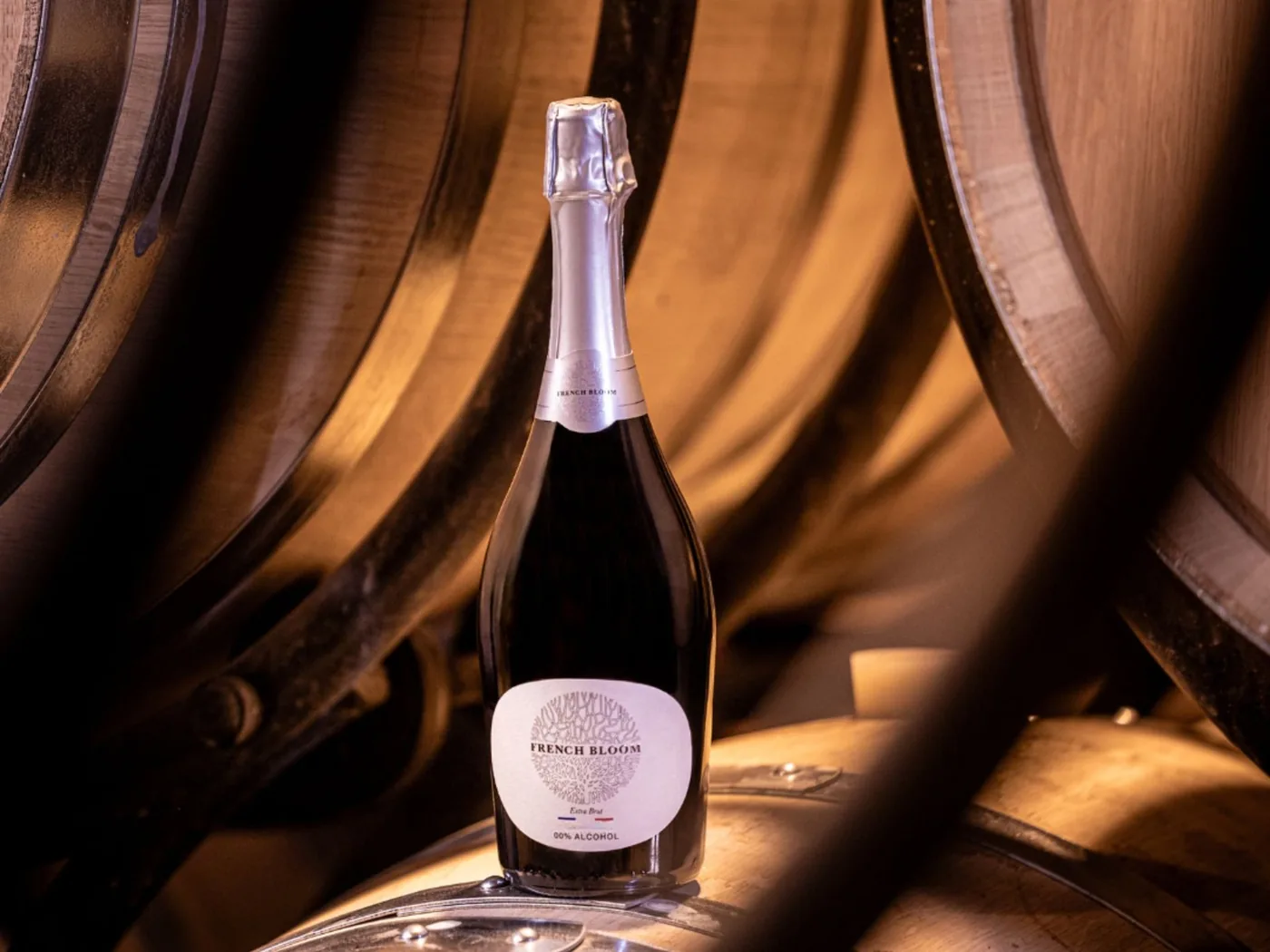
The result shows in the tasting. Le Blanc opens with citrus zest and crisp pear and develops into dried fruit and honey. Le Rosé combines rose petals, red fruit and white peach. L'Extra Brut, made from 100% Chardonnay with 30% aged in barrel, contains neither sugar nor added sulphites: the cuvée for food pairing. La Cuvée Vintage 2023, from old vines, aged eight months in French oak barrels with no dosage, comes in numbered bottles.
Four pointers for service
Temperature. Le Blanc and Le Rosé are served very cold, at 2 to 4 °C. L'Extra Brut and La Cuvée Vintage gain from being served slightly less cold, at 4 to 6 °C, so that the oak ageing shows.
The moment. Le Blanc and Le Rosé carry the aperitif and the start of the meal. L'Extra Brut and La Cuvée Vintage are designed to accompany a dish, which solves the classic difficulty of the alcohol-free menu: lasting until dessert.
The format. The magnum makes it possible to serve a large table at the same pace as the wine drinkers. The 37.5 cl half bottles, in white and rosé, avoid opening a whole bottle for two glasses.
The composition. The cuvées are vegan, gluten-free, preservative-free, with no added sulphites and no added sugar. This information answers guests' questions directly and belongs on the menu.
What changes in the dining room
A guest who doesn't drink alcohol and is offered a real alternative spends as much as the rest of the table. This protects the average spend, with no sales pressure at all. Above all, they are no longer the guest left out: they follow the menu at the same pace, with the same service gestures.
This thinking has led more than a hundred Michelin-starred restaurants to list French Bloom, and Formula 1 to make it its official alcohol-free sparkling wine, served in the Paddock Clubs since 2025.
Questions to ask before listing
- How many tables are concerned? Business meals, international guests and corporate events concentrate demand.
- What turnover? One well-placed cuvée moves better than four products lost in a list.
- Who talks about it during service? An alcohol-free offer works when the team can tell its story, like a wine.
- What price? The positioning must fit the rest of the menu: a carefully made product, presented as such.
All Premium Goods supports its business customers in these choices: selection of cuvées, formats suited to service, talking points for the service team.